Showing posts with label Syosset. Show all posts

Friday, July 04, 2025

What The Port Jefferson Branch Timetable Could Look Like

For today’s post, we’ll take a look at the Port Jefferson Branch. Before I begin, it’s important I note that for the purposes of this post, the term “Port Jefferson Branch” will refer to the stations east of Syosset all the way to Port Jefferson. Stations west of Syosset will be covered in the huge Mainline timetable. However, I've included stations Floral Park thru Hicksville for the convenience of making/reading the timetable and for intra-island travel. Elmont has also been included for travel to the stadium. Unlike today’s timetable, this timetable specifically covers service for stations east of Syosset, making it less long and much easier to read by Port Jefferson Branch customers, then it’s difficult-to-read counterpart. I have decided to include stations Westbury-New Hyde Park for ease of planning and inter-island travel.

The Port Jefferson Branch is the first real branch that has to deal with significant capacity constraints, ones that extremely de-simplify constructing service patterns because of the lack of train storage at Huntington. For every westbound out of Huntington in the morning, and vice versa in the evening, you must either have to run a reverse-peak train or deadhead equipment, something that's very costly for the LIRR since they have to deadhead various equipment trains from various yards such as Hillside and West Side Yard in order to restock the “pocket tracks” in Huntington.

Therefore, there are some pretty rough gaps in service, especially during the peak-of-the-peak. I tried to provide the most service during the beginning and the end of rush hours, as this is when it’s easiest to deadhead equipment to/from Huntington to restock. I still provided decent service however throughout the rush hour, averaging trains out of Huntington every 10-15 minutes during the busier periods. I tried to provide more express service, with local trains west of Hicksville covering the more inner-zone stops in a later post about the Main Line itself.

In the 1970s, the branch was electrified as far as Huntington, and in 1985, it was single tracked to Huntington.

Nowadays, the Port Jefferson Branch is half-finished, half-assed branch that can barely support itself during rush hours. Capacity is very limited on the branch due to not only relatively limited Main Line capacity (at least it's much, much, much better after Third Track Project), but the very limited capacity at Huntington. Obviously, Huntington is no proper terminal for electric trains, and it wasn't ever even supposed to be built as a terminal, (let alone for the second busiest branch) in the first place. 

Therefore, during rush hours, I decided it wasn't the greatest idea to place the most stress on Huntington to have it provide almost all the rush hour services along the entire Main Line, therefore, I placed larger emphasis on smaller, more western terminals such as Hicksville to carry the local stops during these busy times.

The Port Jefferson Branch sees pretty good ridership from Huntington, Cold Spring Harbor, and Syosset, and while diesel territory does pretty well too, like as discussed in the Montauk Branch post, many people still just drive down to the Ronkonkoma Branch and take trains from there for better service. I think my improving service to the best of my ability on these branches, we can help to even things a tad bit out.

Included in the linked PDF file below is full sample weekday and weekend Port Jefferson Branch Timetable. Peak, off-peak, extra, and special event trains are all included. Note that this is a new and improved timetable design. The timetables have yet to include deadhead/non-revenue moves, which will be planned out using AI to align with crew and equipment moves and will be written down on paper. They’ll be included on a separate page in the attached PDF. I tried to mostly minimize deadheading as it’s essentially wasted time, crew, and equipment hours but in some cases it’s unavoidable to make the most out of the resources available.

As always, before we can dive into the actual excel timetables, let’s quickly go over Key Assumptions and Service Guidelines:

Key Assumptions:
  • There aren’t really any Key Assumptions.
Service Guidelines:
  • During rush hours, service to/from both Huntington and Port Jefferson generally emulates current levels, mainly with additional trains added in to help with capacity and to provide more service to where it’s needed.
  • Of the 9 diesel trains from Port Jefferson, 1 terminates at Huntington earlier in the rush hour, 3 go to Hunterspoint Av, 4 go to Long Island City, and the final two go to Penn Station. 
  • During the morning rush hour, service towards Huntington is concentrated towards the beginning and end of the rush hours, when it’s easiest to run equipment in the reverse-peak direction out in order to represent westbound runs.
  • During the evening rush hour, service into Port Jefferson is structured very similar to how it is today, with two dual-modes, with trains into Port Jefferson roughly every 30-40 minutes, with service trailing off towards the end as equipment becomes more sparse.
  • The same can be said for Huntington, which will see roughly the same amount of trains and structure as current levels, with more express trains added in and more service during the peak-of-the-peak.
  • During the weekday and weekend off-peak period, service is provided every 90 minutes to/from Port Jefferson. Most of these trains terminate at Hicksville with a handful only going as far as Huntington. 
  • Huntington is served twice an hour by electric trains to/from Penn Station (continuing the LIRR’s new practice of providing half-hourly service to/from Penn Station on the 3 main electric branches). These trains make a variety of different stops, with some picking up stops west of Floral Park, others skipping those stops entirely, some running on a skip-stop schedule by skipping Carle Place and Merllion Avenue (just depends on the time). 
  • During the busiest travel periods on weekends, I provided extra train service out of/into Port Jefferson to complement the scoots to Hicksville. 
  • During the late night hours, service has been enhanced to include additional late-night trains into and out of Huntington & Port Jefferson.
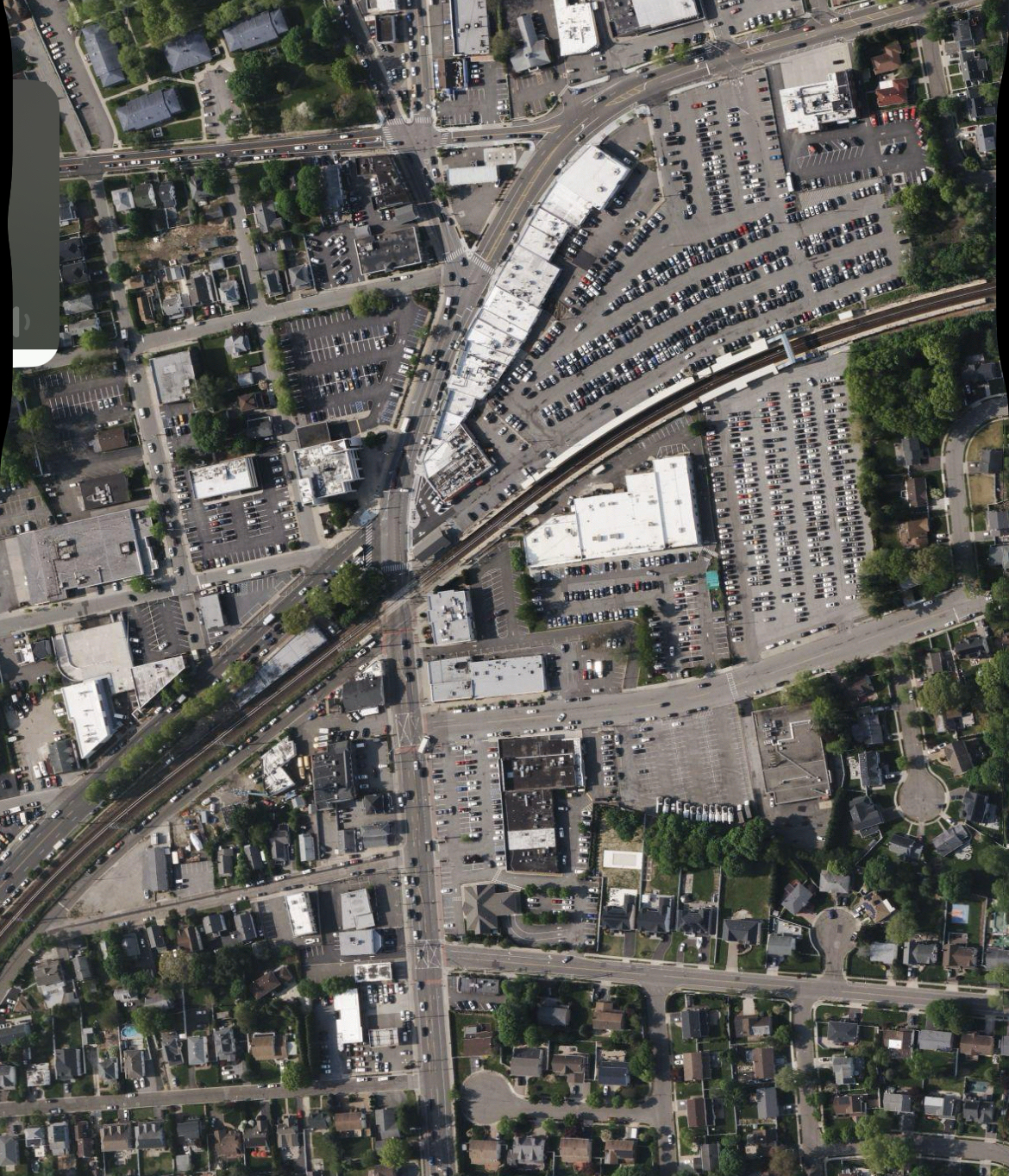
The Port Jefferson Branch (specifically the west of Huntington portion) is a very difficult branch to provide adequate service on, as Huntington isn’t a proper terminal and it can't handle the growing ridership demands on this heavily-used branch. Trying to sustain reasonable service levels, especially during the peak periods was quite a challenge considering the limited amount of space to turn trains, so, in some cases, I had to attempt to combine trains (ex. I had a Port Jefferson train make the added stops of Cold Spring Harbor and Syosset in order to provide service from those stations to HPA). 

I built these timetables with the goal of load balancing. There are certain rush hour trains on the branch that are overcrowded, and I tried to add additional trains in to supplement those, with many of those trains running to alternate terminals (HPA or ATL), not only helping even the loads but also providing direct one-seat rides back to those places. I also tried to provide more express service to/from Huntington during the busiest periods to take stress of the local trains. I also tried to minimize large gaps in service, especially east of Huntington. There’s a long 30-min gap during the rush hour between trains 617 (the 6:40am out of Port Jefferson) and 619 (the 7:10am out of Port Jefferson), and I was able to minimize that by adding a new train in departing at 6:57am.

Another aspect of the timetable that got an upgrade was reverse-peak service. While reverse-peak service got a huge upgrade after the third track, I still feel like reverse-peak service is under thought and underserved, especially considering they deadhead so many sets to Huntington in the morning. I tried when possible to provide robust reverse-peak service, by instead of deadheading all these runs I at least tried to run them in revenue service, providing express service to certain stations. I think I did a decent job of better utilizing the limited infrastructure. The Port Jefferson section was more difficult to fix considering lack of passing sidings, but I tried my best to improve service, especially in the westbound direction on Fridays with students coming home from Stony Brook University, along with people heading in for concerts, which can see the last reverse-peak train out of Port Jefferson, crushloaded due to it running with only 3 cars and it being the last train before the 3 hour gap. I also was able to close that afternoon westbound obnoxious gap as well.

One thing you'll notice with some of the midday Port Jefferson Branch trains is that many of them run to Hicksville. One of the many problems with the Port Jefferson Branch is the obnoxious transfer at Huntington. Not only is it slow, but it's just very painful. Hicksville is much better configured to handle transfers, and the even better thing is, I can have these trains connect with Ronkonkoma trains, providing an even faster ride. While I can't eliminate the capacity issues at Huntington, I can at least annihilate that annoying transfer!

Another thing you'll notice, but will be discussed much more in the Main Line timetable, is that many of the off-peak Huntington trains that typically would run "express" skipping Merllion Avenue and Carle Place no longer do so. Especially during the morning hours, on weekends, when they run express service skipping these poor stations without even saving any time! I don't get the point of that, as your literally just denying them a train when it could easily stop there and still get to it's next stop on time. Therefore, express service has only been provided during hours where there isn't supplemental service west of Hicksville by locals starting out of Hicksville.

Similarly to what was done on the Montauk Branch, on weekends, during the busier travel periods, I provided two additional trains per direction, with the first one being a dual-mode train to Penn Station, and the second one going to Jamaica. I had the dual-mode train make stops at Huntington, Cold Spring Harbor, Syosset, Hicksville, Westbury, Mineola, and New Hyde Park to augment service there. I think this will go a long way in providing better service and reducing crowding at the Main Line stations. I think these trains are well-timed to encourage off-peak travel, a growing trend on the Long Island Railroad!

You'll notice, however, that Huntington is one of the only electric terminals that doesn't recieve any extra service during weekend mornings or afternoons. I did this because I didn’t want to have to have to run any more equipment out there nor turn any more trains, so instead I will run extra trains from Hicksville, to supplement service on the Main Line, and customers at Cold Spring Harbor and Syosset can take advantage of the two additional thru Port Jefferson trains which all stop there.

To be honest, there isn't that much to say about the Port Jefferson Branch timetable. It was difficult because I had to try to provide as much service as I possibly could out of Huntington, and therefore I had to deadhead a lot of equipment. 

Similar to what is the case with the other branches, this timetable is too numerous to cover all the little oddities, but I'm very happy to and would love to answer any questions you may have. I will also happily take any suggestions, especially if your a commuter on the branch yourself. Next time, we'll take a look at the huge Main Line timetable, then take a look at the equally large Babylon Branch timetable, before wrapping up the regular branches with the South and North Fork timetables.

View an index of all other sample timetables, the post about those timetables, and revision history, right here.

Monday, January 20, 2025

A Rough Morning Commute on Martin Luther King Day

The first major snowstorm of 2025 just hit Long Island last night. We got at least 1-3 inches in most parts, some getting 2-4. I think a nice little snowstorm to really start us off. However, transportation in the area has definitely had a rough morning.

While the LIRR didn’t have to suspend any branches this morning, there was equipment trouble on the Montauk Branch, and switch trouble on the Ronkonkoma Branch, therefore really screwing up those who needed to go in today. Many Ronkonkoma Branch trains were delayed, including 2 in a row, and if this was on a normal weekday, I don’t think the LIRR would’ve gotten away with it, but since it’s a holiday, things were alright. One of my favorite trains, #7, which had already had a rough run between Montauk and Speonk, got even more delayed by having to receive substitute equipment at Speonk. It ended up arriving into Long Island City 50 minutes late.

All in all, The South Shore did a nice job this morning. And, the LIRR did a good job with communication, however, I definitely think for those unlucky people who do have to go in, it’s not a great start, however, I think the LIRR did a good job managing the chaos.

To make things even worse, train #1619 collided with a vehicle just west of Syosset, further screwing up the morning rush hour for Port Jefferson Branch riders. Multiple Port Jefferson trains got canceled at Huntington or Hicksville, and other trains racked up a lot of delay minutes. Another notable thing to note is that train #608, (the 7:53am from Jamaica to Port Jeff) ended up getting renumbered to #608CMBX and ended up making all the local stops between Jamaica and Hicksville.

As of the time of writing, service has pretty much gone back to normal, train #61, (the 9:40 from Patchogue), is cancelled because of #60 getting cancelled, but other than that, things have pretty much gone back to normal.

I’m hoping as people go back to work after the long weekend, things will go back to normal, and I hope the LIRR continues to do a better job managing all the chaos, especially at 6:00 in the morning!

Sunday, January 19, 2025

Syosset Platform Gap

Syosset station on the Port Jefferson Branch’s location is quite a conundrum. On one hand, it’s an ideal location as it’s right in the middle of town, but on the other hand, it sits on a relatively sharp curve, meaning there’s a huge gap between the train platform.


The problem is, when a train with a straight side tries to pass the platform. If they don’t shave the platform back enough that the car ends can safely clear the platform, the train could collide with the platform.

So, the Syosset station platform has a enlarged gap at certain points because of the curve problem.

Not surprisingly, many of the door opening points at Syosset have platform gaps that range between 10 to 15 inches at the sharpest points. And, to make matters worse, the track is superelevated through the station to allow for faster operating speed and less wear and tear on the tracks. 


Back a couple of decades ago, there was a storm of gap-related incidents. And, there was even a couple month span where their were loads of gap incidents. With gap incidents come lawsuits, and the LIRR got quite a bit of time in court following this. Syosset, got the heat of the news as it was the location of many of these incidents. In January 1996, there was one day where 3 different gap incidents occurred in the same day. What a coincidence. 

Now, a gap of 10-15 inches should be easily manageable by any able-bodied adult, right, but with the age of smartphones and more and more people staring at there cellphones while stupidly attempting to board a train, the gap incidents have gone on a sudden rise. You’d think that the gap incidents would’ve gone down, right, considering the station has been there for only 159 years!! However, people don’t pay attention, if they could take their eyes off their smartphones for a mere 12 seconds to confirm their foot is extending onto the train, this wouldn’t be an issue. And if people do “fall” into the gap, they enjoy suing the LIRR for any injuries they may recieve. In my point of view, why should the LIRR have to pay for a person’s stupidity and lack of common sense. 


Since then, the LIRR has significantly ramped up their efforts to alert people of the gap. They started a signage campaign and this consisted of “Watch the gap” announcements on trains, and reminders to watch the gap all over the platforms and trains.

And Syosset is the jackpot of the effort. The invaluable vlog, The LIRR Today’s creator, Patrick, had made a similar post and he had gone to Syosset and counted how many watch the gap warnings there were. Can you guess? Take a guess and then scroll down.


The answer is 258!

Yep, you heard it right, there are at least 258 watch the gap signs of all types and sizes plastered all over the Syosset station

Here is a montage of photos of some of the different types of Watch the gap “merchandise” at Syosset:

In addition to all of that, the LIRR poured in the money to station a special “platform conductor” to help with the boarding and alighting process at the station. His main role is to help those who may require extra assistance when boarding or exiting. He’s stationed on the westbound platform in the morning, and eastbound in the afternoon.

Millions of more dollars have been spent on studies aiming to solve the door gap problem. Some have proposed gap fillers as seen in some NYC subway stations, however that would be ridiculously expensive and the gap isn’t even that big. Others have proposed moving the station however I think that obviously isn’t going to happen any time soon.

Instead, I think the best solution is (tell me if I’m wrong)

Step over the damn gap.