Thursday, February 13, 2025

Interlocking Walkthrough: STONY

In today’s interlocking walkthrough, we’re gonna take a look at STONY interlocking which is located on both ends of Stony Brook on the Port Jefferson Branch. STONY 1 and STONY 2 are two interlockings that make up an interlocking that is very similar to the other Port Jefferson Branch interlockings. Instead of having a passing siding to either side of the station like at stations such as Mastic-Shirley, the station itself is the passing siding.

The two switches that make up the interlocking, that’s simple and very similar to the other Port Jefferson Branch interlockings. Instead of having a passing siding like at stations such as Mastic-Shirley, they turned the station into the passing station itself.

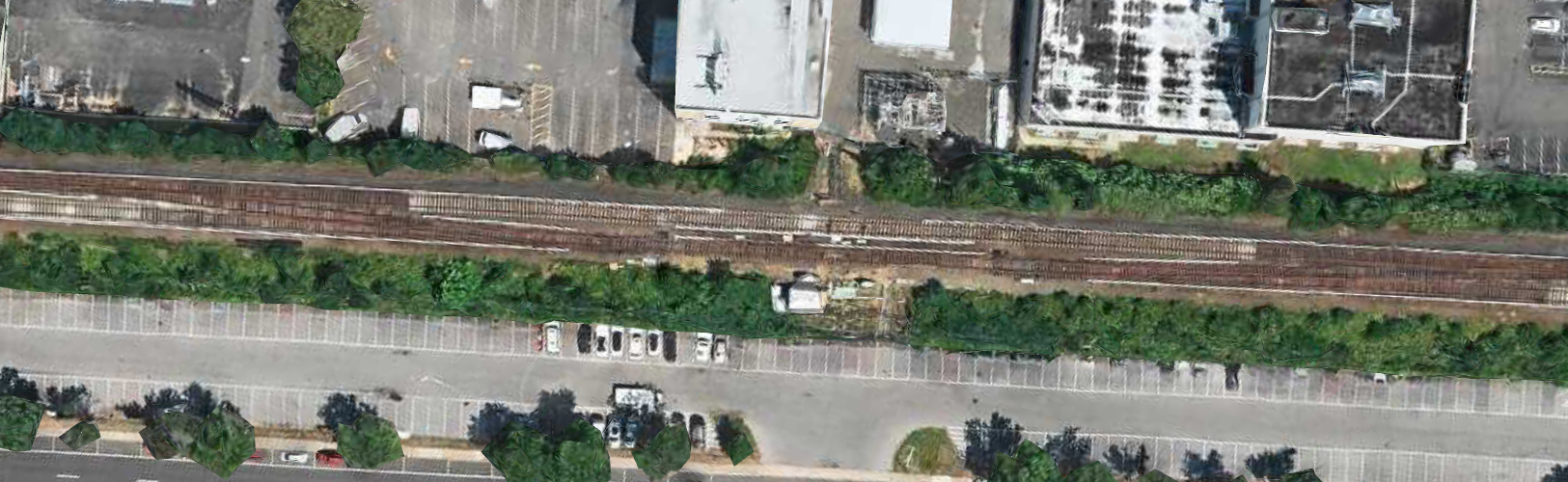
The tracks around here are on a pretty steep angle, making it tough to get a good diagram. But, down below is a satellite image of the interlocking.

Western side of the interlocking

Eastern side of the interlocking

STONY interlocking is roughly about 53 miles away from Long Island City. STONY 1 is west/compass south of the station, and splits the tracks into 2 tracks, and on the other side of the platforms, STONY 2 contains one switch that merges the 2 tracks into 1.

This simple interlocking also doesn’t have much history. Unlike the other Port Jefferson Branch interlockings, this interlocking wasn’t two separate interlockings combined into one. This interlocking is also considerably newer then other Port Jefferson Branch interlockings (both STONY 1 and STONY 2 went into service in 1992.)

In the early 1990s, signals were extended to include the Port Jefferson Branch, and in 1992, both STONY and JEFF interlockings came online.

This interlocking still houses the position-light signals installed in the early 90s.

Photo: Wikimedia Commons

The nearest interlockings are the POST interlocking to the west in Smithtown, and the JEFF interlocking in Port Jefferson.  

Wednesday, February 12, 2025

The Flushing Line Improvements Project

So, today, let’s take a break from the Long Island Rail Road and take a look at one of the hottest NYC transit construction projects that’s currently going on.

First off, the goal of this project is to improve conditions to meet ADA requirements, address the dire conditions of some of the stations, and boost reliability along the IRT Flushing 7 train.

As of now, both the Manhattan-and Flushing-bound (7) platforms at 111 St and 82 St- Jackson Heights have reopened.

A YouTuber I know, known as JC if your interested, as broken the project into multiple phases, which is helpful considering how confusing things can get.

Phase 1-

  • The Manhattan-bound platforms closed at 111 St and 82 St- Jackson Heights.
Phase 2- 
  • The express track at Woodside-61 St closed.
Phase 3-
  • Phase 3, the one that was just completed, the Flushing-bound platforms were closed at 82 St-Jackson Heights and 111 St.
Phase 4-
  • In Phase 4, all Manhattan-bound <7> trains will run express between Main St and 46 St, and then local via temporary platforms at 46 Street- Bliss St, 40 St- Lowery St, and 33 St- Rawson St, then local to Hudson Yards 34 St.
Phase 5-
  • In Phase 5, Queens-bound <7> trains will run local to 46 St, then making express stops after Woodside-61 St to Flushing-Main St,
Phase 6-
  • The Flushing-bound platform closed at 103 St-Corona Plaza.
Phase 7-
  • The Manhattan-bound platform closed at 103 St- Corona Plaza.
As for when the start of Phase 4 will occur, we’re currently waiting for work on Woodside-61 St to finish, so, when that happens it should begin. My guess is that it’ll begin sometime in the middle of the year like May, June, or July.

And, the most asked question is “when will full <7> express be restored.” And, the best answer to that may be small periods in between phases.

I hope this clears up some stuff about this project, which I consider to be extremely confusing.

Monday, February 10, 2025

Exciting Things Coming

I apologize for the lack of real interesting posts, and the reason for that absence is because I’ve been putting the final touches on a bunch of larger projects that I’ve been working on for a long time. I can guarantee you everyone will really enjoy these upcoming projects, so I apologize for the brief “intermission”. 

It’ll be worth the wait!

-Gavin

Sunday, February 09, 2025

LIRR ridership increasing since start of Congestion Pricing

Somehow, it’s officially been one month since the MTA introduced its new congestion pricing program- which, if you don’t know, essentially tolls anyone entering Manhattan below 60th St a small fee, similar to EZpass. Data shows that 30,000 fewer vehicles on an average weekday enter the toll zone.

Long Island Rail Road commuters have noticed more people on trains, particularly at certain stations. While Metropolitan Transit Authority officials hoped and expected for these new tolls to push more commuters out of their car and onto the trains, however the overall 13% systemwide ridership increase didn’t beat December’s 15% increase, suggesting Congestion Pricing isn’t the only thing to credit.

LIRR president Rob Free said this: “I think it’s too early to make any direct correlation as to ridership gains being specific to congestion relief”. While he believes the tolling plan could be one of several factors, it seams he thinks it’s a mix of factors.

MTA officials have pointed to the fact that there’s plenty of room in the transit system for that increased ridership, noting that many LIRR trains operate well-below there capacity.

An interesting point of this is where these ridership jumps are located, with the largest jumps being located at the New Hyde Park and Garden City stations in Nassau County, and the Ronkonkoma station in Suffolk. MTA figures show that ridership at New Hyde Park has climbed 22% since January, and that Garden City has climbed 19 percent, compared to December’s increase of only 3%. Other stations across the network have also seen ridership gains including more western stations such as Douglaston and Woodmere.

mta
Credit: Metropolitan Transit Authority

According to Newsday, who interviewed passengers at New Hyde Park station recently, passengers noted that they saw more passengers out on the platform, and on the train in recent weeks. 

Another factor that could be putting more people onto LIRR trains is the ongoing A train shutdown that offers Far Rockaway riders a $2.75 discounted faire into Manhattan during the four-month shutdown for repairs.

Personally, I’ve noticed additional crowding, especially on the Hempstead Branch.


Now, I know the 5:00pm rush hour isn’t known for undercrowding, however, the fact that the branches hit hardest this month seam to be the Hempstead, Long Beach, and Oyster Bay branches, branches not known to be too crowded.

‘Room for everybody’

Not only have the railroads experienced ridership surges though, as many subway lines and express bus routes have also experienced congestion-pricing related ridership increases. Addressing concerns about toll-related potential for overcrowding, MTA Chairman Janno Lieber has said “there’s room for everybody”. He also told reporters that “if every one of the 130,000 commuters who drive into Manhattan everyday took the Subway, bus, or Long Island Rail Road or whatever, instead, it would be a drop in the bucket”.

But, still, it’s not like LIRR riders have experienced this level of ridership recently, though. After plummeting substantially during the COVID-19 pandemic, LIRR ridership was able to rebound to about 86% of what it was in 2019– a year in which the LIRR carried 91 million riders, the most in 70 years. A lot of the credit for ridership not rebounding to its full potential can be given to the fact that many people started working from home.

LIRR President Robert Free, with the goal of extinguishing concerns about potential overcrowding, said that since the opening of Grand Central Madison, the LIRR dramatically increased the amount of trains. Free also noted that during peak periods, the LIRR operates at about 60% capacity. However, in January, a small handful of peak trains operated at 90% or above. While many believe these ridership increases are mainly thanks to congestion pricing, Rob Free believes it’s also important to factor in the testament to the LIRR’s increased performance, which includes growing customer satisfaction scores and a 95.6% on-time performance (OTP) in 2024. 

Apparently, despite so much criticism, the MTA’s congestion pricing plan has been so successful that they have begun hearing from officials off other cities that they are interested in implementing their own plan. Still, that doesn’t necessarily mean New York’s plan is here to stay, as it faces huge backlash and opposition, including more lawsuits. Even our US president, Donald Trump, has even vocally opposed the plan.

Now that we are less then a month away from the new timetables, my hope is that the LIRR will analyze this data, and try to make the best improvements to the new timetables. At this point, only time will tell. 

Wednesday, February 05, 2025

Interlocking Walkthrough: NECK

Welcome back to the Interlocking Walkthrough show! Today's interlocking is NECK interlocking, which is located just east of Great Neck, which is roughly 14 miles east of Long Island City. The interlocking, which marks the end of double-track territory on the Port Washington Branch, sees quite a bit of use on a good day. This interlocking, like many on the branch, was put into service in the 80s. 

Switches

This interlocking is quite simple in design, as all there is at the end of the two track line, there's a crossover that sends track 2 to track 1, which it goes on the ten-minute section to Port Washington. 

However, NECK interlocking has an added twist: an added pocket track. The pocket track, imperative in an upcoming project, makes the busy rush hour service on this line possible, allowing turns to end early along the line (mainly Bayside, Little Neck, or Great Neck), and like Massapequa, turn on it and head back into the city. Eastbound thru-trains to Port Washington would merge onto track 1 using the crossover just east of the station, while terminating trains to Great Neck pull east and go straight onto the pocket track, where they can turn around. And, once the train has turned around, depending on the length of the train, there's multiple places where trains can exit the pocket track as you get closer to Great Neck. 

Signals

Now let's return to NECK interlocking. NECK interlocking is home to "old style" position light signals that are located on gantries at the westernmost point of the interlocking. There are also signals on pedestals at the easternmost point of the interlocking for trains coming off the Manhasset viaduct. 

Towers

There is no control tower at NECK, From it's inception, like the other Port Washington Branch interlockings, it was controlled by the busy HAROLD tower, near the HAROLD interlocking in Queens. But, when HAROLD Tower was closed in 1999, control of the Port Washington Branch interlockings was interestingly handed over to Jamaica Control Center (JCC) despite these trains not even stopping at Jamaica!

For the first portion of the interlocking, service is topped out at 60 mph (which is the general Port Washington Branch speed limit), but, about halfway through the interlocking, the service speed drops to 50mph for the remaining run to Port Washington.

Neighbors:

To the west, there's BAY interlocking, and, as a matter of fact, NECK interlocking is the easternmost interlocking on the Port Washington Branch as the Port Washington yard switches aren't part of any interlocking. 

That should do it for NECK interlocking. I'll be releasing a post soon that will detail the Great Neck Pocket Track, and the next installment of Interlocking Walkthroughs will appear next Wednesday on STONY interlocking.

Sunday, February 02, 2025

Interlocking Walkthrough: HAROLD

In this interlocking walkthrough, we're going to take a nice look at Harold Interlocking, one of the craziest on the LIRR. Harold Interlocking is where the LIRR's Mainline, Port Washington Branch, and even Amtrak's Hell Gate line all merge by the very very end into 4 tracks that go into the East River tunnels toward Penn Station.

It's important to note that Harold Interlocking has been changing recently, and will continue to due to the sheer size of the interlocking, therefore, things might be come inaccurate and I apologize in advance for that fact.


It's extremely difficult to portray this interlocking with any sense of organization, because of again, the fact that so much is going on at once, not only do we got those tracks, but we also got 2 of the biggest yard facilities in New York and the elevated (7) tracks passing by.

I'm going to make my best effort to explain the interlocking with the photos, references, and information that is available to me. As you can see below, it’s extremely difficult to understand this interlocking with any level of accuracy.


To the right, the LIRR’s Port Washington and Mainline branches and Amtrak’s Hell Gate line merge together, forming this interlocking. When they built this interlocking, they also built some flyovers to shuffle the tracks just slightly before entering the interlocking.

These flyover tracks are located just east of the interlocking, and they shuffle the tracks so all the westbound trains are grouped together by their destination, and all the eastbound trains are grouped together by their destination. For instance, there’d be one track for all the Hunterspoint Av. trains, a couple for Penn Station trains, and a couple more for Grand Central-bound trains. If your lucky enough to be onboard an westbound LIRR train, you should be able to tell what’s going on under these flyovers when there’s a brief period where it looks like you have entered the tunnel, but then come right back out (I remember always thinking you’d be in the tunnel but then I’d be surprised when we left so quickly back when I was a kid!) 

By doing this, it makes things much more simple in the actual interlocking, as now trains only have to switch among tracks headed for the same direction, and there’s no need for risky and time consuming things such as crossover moves.

Once you get into the interlocking you can see two distinct sets of tracks…. Westbound and Eastbound.

By starting with the westbound tracks, the Port Washington Branch westbound track merges with Amtrak Hell Gate Line (this is the line that carries Northeast Regional and Acela services coming into New York Penn from places such as Boston and Vermont.) 

West of this point, there are 3 main tracks that flow through HAROLD interlocking. Eventually, 2 of these tracks will become lines 2 and 4 into the East River Tunnels. The third will become a passenger track into Hunterspoint Avenue, and a couple others will go to Grand Central Madison.

Continuing west through the interlocking there are two parallel crossovers that allow trains from the two mainline tracks to shift over one track to the right, and later on, there’s another set of crossovers that allow trains from the northern tracks to move down to the lower ones.

In the midst of all this craziness, the unpowered North Engine Layup Track normally stores a protect engine. Protect engines, as you probably know, have the sole purpose as to jump in and rescue a train that has broken down. For some 50 years, the LIRR has supplied protect engines at HAROLD interlocking. 

Due to the sheer size of this interlocking, I'm not even going to bother explaining the eastbound, however, I'm sure by looking at the diagrams you can get an idea. 

The so called "zookeepers" of the interlocking set up shop at Penn Station Control Center, and HAROLD used to be controlled by a tower onsite bearing the same name, however, when PSCC opened, it moved there. 

As you can see, HAROLD interlocking is one of the busiest interlockings in the country, and while it's definitely not perfect, it should definitely get credit for moving hundreds of trains into and out of the nation's greatest wonder- New York City everyday. I hope you've enjoyed this post and I got quite a bit of amazing things coming soon. Feel free to comment if you have any questions.

Saturday, February 01, 2025

Interlocking Walkthrough: ROCKY

ROCKY interlocking, which, before you ask, is not in Far Rockaway, and is instead the key to an interlocking to the brand new spur station to the Rockies, just kidding. It’s instead 2,750 feet east of you guessed it, Rockville Centre. This small little interlocking on The Montauk Branch is 20 miles away from Long Island City by rail.


This interlocking is extremely simple in nature and is essentially a copy of its neighbors’ AMITYVILLE and WANTAGH.

This interlocking first entered service on April 30, 1983, and has been controlled by VALLEY or BABYLON ever since.  Interestingly, on the morning this interlocking entered service, the railroad set up a temporary block station at the site of the crossovers. That block station has the distinction of only being in service for one day!

As you can see there’s not much to say about tiny little ROCKY interlocking. This interlocking is bordered by PORT interlocking to the east, and VALLEY interlocking to the west.