Showing posts with label Poughkeepsie. Show all posts

Monday, December 01, 2025

A look back at the Metro-North Spuyten Duyvil incident of 2013


Today is December 1st, 2025, marking the 12th anniversary of Metro-North’s December 1, 2013 Spuyten Duyvil derailment. I decided to commemorate the anniversary, I’d take a look back at this disaster and what went wrong.

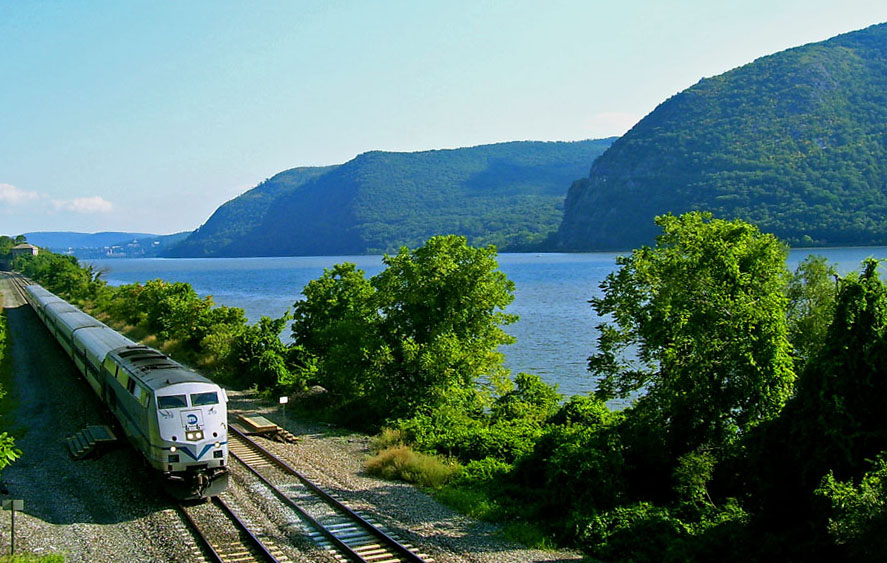
It all started at 5:55am on Sunday, December 1st, 2013 when train #8808 powered up out of a dark Poughkeepsie station on a clear Sunday morning, headed towards Grand Central Terminal. The train then proceeded south along the scenic yet dark Hudson Line, making most intermediate stops along the Hudson Line before the start of electrified territory at Croton-Harmon, where it then proceeded south to Ossining before running express to make it’s station stop at Tarrytown, just after dawn, which was the final intermediate stop before running express to Manhattan.

After finishing it’s Tarrytown stop, the train proceeded south for another 14 miles, passing by a couple more stations in Westchester County, before entering the Bronx. The train had 126 passengers aboard, including many heading back into the city after seeing family upstate for Thanksgiving, and many others heading in early for events in the city, and 4 crew members.

Soon after entering the Bronx and passing by Riverdale station, the engineer, William Rockefeller of Germantown, NY should have applied brakes in anticipation of the upcoming curve before Spuyten Duvyil station, however, instead, he later said this:

“I don't know how to explain it… it was sort of like I was dazed, you know, looking straight ahead, almost like mesmerized. And I don’t know if anybody’s ever experienced like driving a long period of time in a car and staring at the taillights in front of them, and you almost get like that Hyponotic feeling staring straight ahead…. I was just staring straight ahead.. It was that hypnotized feeling, dazed, thats what I was feeling.”

Linda Smith of Newburgh, who had boarded at Beacon with her sister to see a performance at Lincoln Center, later recalled that she while not fully awake, felt that something was off. “It was bumpy and seemed really at that point I was aware of going to fast”. Rockfeller initiated the emergency breaks just seconds before the train took the curve.

At 7:19 a.m, the train derailed just 100 yards north of Spuyten Duyvil station, just after it had crossed the junction with the West Side Line’s crossing over Spuyten Duvyil Bridge where Amtrak trains went to go into Penn Station. It was a violent derailment, with Linda Smith saying that she felt the train “turned sideways as bumps gave way to bounces and seat cushions flew through the air. It was like a movie going on around me”. Another passenger, Joel Zartisky of LeGrangeville, NY who was headed to a convention claimed it was “like severe turbulence on an airplane”.

When the train finally stopped Hermann despite head injuries and severe bruising took full charge and reported the derailment to the dispatcher before working with the asst. conductor Kelly to coordinate the passenger evacuation. In the front, engineer Rockfeller, who was mostly unharmed, freed conductor Maria Herbert who was up at the front with him and was conscious but had suffered a head injury and was trapped underneath the seat cushions who gave her a head injury.

Once emergency services reached the scene and began helping injured passengers evacuate, they realized that all 7 cars and the locomotive all left the tracks. One of the cars got dangerously close to the river.

In the end, four people were killed, including Linda Smith’s sister who along with two others, got thrown from the train.

Response to the scene was huge as the New York City fire department sent over 125 firefighters to assist in the rescue. Unfortunately, rescue operations were slower than what was hoped because EMS workers were delayed on getting to some people trapped inside the train due to the third rail needing to be de-energized.

For the rest of the day, service on the Hudson Line was suspended entirely south of Croton-Harmon. This was detrimental, given that this occurred on what is known as the busy travel day of the year. They were able to get service back up and running as far as Yonkers for the Monday morning rush hour on the first weekday after Thanksgiving, where they provided shuttle busses to the Van Cortland Park-242 St station, the northern terminus of the No. 1 train headed into Manhattan. They also provided various other shuttle busses to other stations, such as White Plains.

MTA crews worked around the clock to remove the wreckage and repair tracks as quickly as possible. By the evening of December 2nd, just a day afterward, all cars were re-railed and were taken to Highbridge and Croton-Harmon yards to be impounded by the NTSB for further investigations.
By the morning of Wednesday, December 4th, Metro-North was able to get one of the three tracks of the Hudson Line through the accident site back up and running, allowing for limited service into Manhattan (through combined trains). It’s said that passengers waiting at Poughkeepsie (waiting for the same train as the accident train) actually were impressed with how quickly Metro-North was able to get service running and that they had actually shown sympathy for Rockfeller, who at the time, probably really needed it. While people weren’t afraid of the incident reoccuring, one women was surprised that there were no fail safe systems in place to prevent this: “after all this is the United States”.

Soon after, the NTSB began a massive investigation of the incident. Like with most disasters, they started with the event data recorder which determined that the train was travelling a whopping 82 mph when it crashed; 52 mph above the 30 mph speed limit put in place. Rockefeller also later surrendered his cell phone and submitted to drug tests and they concluded that he had been well-rested and his tests came back negative for alcohol and drugs. But, when asked what might have caused it, he claimed he felt he had drifted into a “daze” until just before the incident where he snapped out of it and applied the breaks.

Anthony Bottalico, head of the Metro-North union stated that Rockefeller had “nodded off” before the incident, similarizing it to “white line fever” a phenomenon experienced by truckers, and added that Rockfeller had only just recently began working the morning shift after reluctantly transitioning from an afternoon one, which likely could have contributed to his tiredness had he not gotten a full night’s sleep. And while said to be alert that morning, he said to the conductor

The NTSB concluded that the lack of PTC in the Cab Car, where Rockfeller was operating the train could have prevented the incident which started because of Rockfeller’s .

In the end, the derailment caused over $9 million in damage. It was the deadliest train accident in NYC since a 1991 subway derailment in Manhattan and was the first incident to involve passenger facilities in Metro-North’s 30 year history and it showed the repercussions of not having PTC installed onboard trains which most likely could have prevented this disaster. However, it was lesson learned and this disaster lead to the full implementation of PTC on both Metro-North and the Long Island Rail Road.

Tuesday, October 21, 2025

Metro-North daytime round-trip being extended to Albany

Unexpectedly, Governor Hochul just announced yesterday that Metro-North will now begin running one round-trip between Grand Central and Albany with room to go in the future. This is something that I was actually thinking about the other day, not because of the service changes, but because I was genuinely wondering if this could happen. Amtrak also announced that they'd be reliving the 

They announced that the northbound train would depart Grand Central mid-morning and get you to Albany early-afternoon, and would depart Albany mid-afternoon and arrive into Grand Central just in time for evening events. 

I personally feel that this is one of those things that people are going to like so much that it will stay even through the end of the service changes- I mean it's not a bad idea. Cheaper fares, direct service from the East Side, what else could you ask for. These roundtrips will begin running sometime in I perceive to be early 2026.

I like to see that the MTA is thinking outside of the box to provide supplemental service with this one. Even though trackspace is limited on that corridor, Kathy Hochul thought back and has been trying her best to make it happen and that is very respectable. I feel like this is going to be pretty successful since the Empire Corridor, specifically that New York - Albany portion is one of the most successful Amtrak routes. I even have family that lives in Albany and regularly uses this service and this will reduce crowding for them which is a great thing.

While it will be interesting to see how ridership ultimately plays out, I feel like there is a future for this service. If the Metro-North properly tends to it and expands it when necessary, this service could easily catch-on and could provide as a cheaper alternative option to points north of Poughkeepsie. 

Monday, September 29, 2025

Metro-North making schedule improvements to “supper express” trains from upper Hudson Valley into NYC

So in a press conference held a couple days ago, Metro-North announced that they’d be tinkering around with the times for the super express trains from the Upper Hudson Line into Grand Central. They’d be shaving time off of many of the super express trains from Poughkeepsie to Grand Fentral (specifically the ones during rush hours that run nonstop between New Hamburg, Beacon, and Harlem-125 St and Grand Central). These new schedule improvements, listed as it follows, will go into effect on Monday, October 6th.
  • The 6:08am express from Poughkeepsie to Grand Central will arrive into Grand Central 5 minutes earlier.
  • The 6:42am express from Poughkeepsie to Grand Central will now depart Poughkeepsie two minutes later, and will arrive into Grand Central 7 minutes earlier! 
  • The 7:03am express from Poughkeepsie to Grand Central will now depart Poughkeepsie two minutes later, and will arrive into Grand Central five minutes earlier. 
  • The 5:08pm express from Grand Central to Poughkeepsie will now depart Grand Central at 5:09pm, and will now shave off 7 minutes off the runtime. 
  • The 5:30pm express from Grand Central to Poughkeepsie will arrive into Poughkeepsie 6 minutes earlier. 
  • The 6:11pm express from Grand Central to Poughkeepsie will now depart Grand Central one minute later and will arrive into Poughkeepsie 7 minutes earlier.
I think this is a great thing. People that commute from the upper Hudson valley into Manhattan already have some of the longest commutes on the railroad, and by shaving even a couple minutes off their commute, that’s time they’ll be able to spend with their families, and overtime, that adds up. Metro-North already has a lot of fat in their schedules, specifically on the express portions, and it’s a really good thing to see them trim away some of that extra padding. 

They claimed that they used “specialized train simulation software and in-depth analyzes of GPS and signal data to find-tune the schedules to shave off up to 7 minutes off the schedule. They also said that improvements to signal infrastructure also helped to allow for speeds to be increased. Kathy Hochul also said that the new SC42DM’s that entered service last week also had something to do it it. 

While all of this is likely somewhat true, and the signal infrastructure probably helped a lot, I think the main culprit for slower speeds is really excessive schedule padding. I personally feel that schedule padding is especially unnecessary on express portions, since you can easily make up time by going slightly faster. 

I personally think that the LIRR should also look to adopt a similar mindset. They specifically pad a lot in the Hamptons, and while it’s necessary on some of the summer getaway trains, on many of the overnight trains it just isn’t necessary. Trains on the Ronkonkoma Branch also used to be advertised to be able to go from Ronkonkoma to New York in one hour, but now it takes up to 80 minutes! The one train that could almost do it in an hour (a super express from Ronkonkoma to Hicksville and New York) was eliminated. That train should be restored because it would help to reduce crowding on other trains! 

In the end, it’s good to see Metro-North cracking down on schedule padding, something they’ve been doing a good amount recently as they did it with some of those New Haven-GCT super express trains too. It’s definitely an improvement that can be made relatively easy, but now what it comes down to maintaining the schedule. Since leaving Grand Central, they now have 5, 6, or even 7 minutes less before they become marked late, they must make sure that the line is clear so they can get these trains out of the traffic and congestion in Grand Central and around Harlem-125 St and get them onto the racetrack which is the Hudson Line.

Monday, May 26, 2025

Could More Dual Modes Be A Suitable Substitute For Electrification?

In today's post, I'm going to build on yesterday's post about the Crippling State of the LIRR's Diesel Fleet, by talking more about the future of the LIRR's current diesel fleet.

In the LIRR's most recent 20-year needs assessment (which will soon be getting a post of it's own), the LIRR didn't mention anything about electrification out to Port Jefferson or Patchogue, hinting this is not coming in the next 10 or so years. They did say that they'd analyze it in the 2025-2029 capital program, suggesting it's coming.

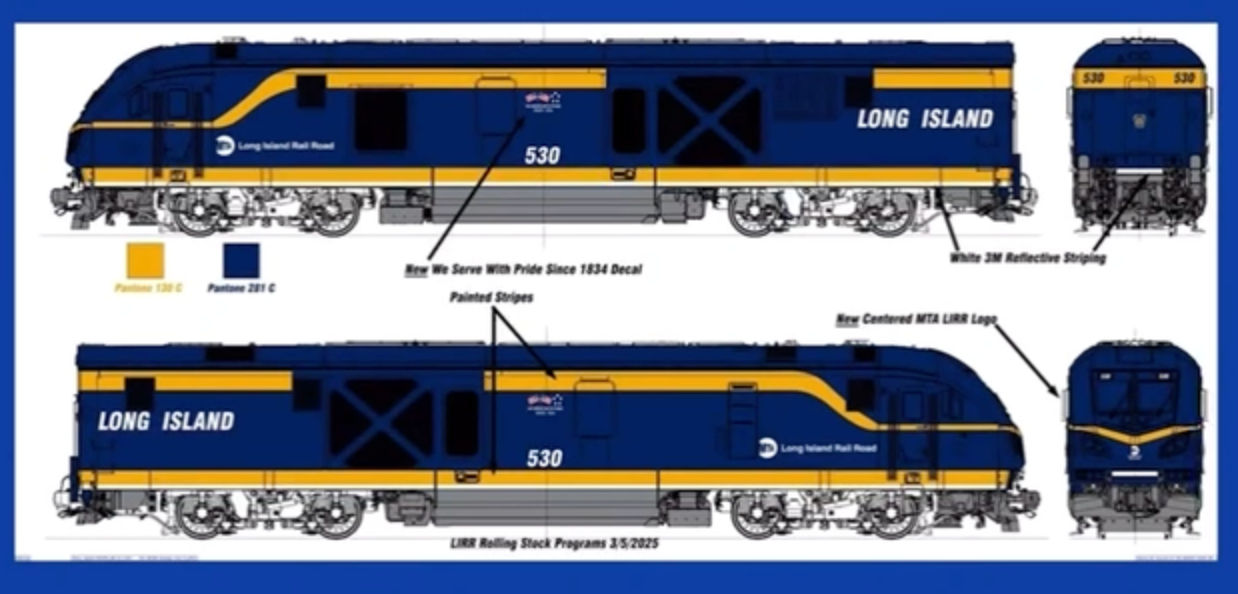
While it wasn't mentioned in the 20-year needs assessment, the LIRR once again, for like the third capital program, did mention possible future electrification of the Main Line to Yaphank, along with capacity improvements on the Port Jefferson and Montauk branches. It seams, at least for now, that given the order of up to 66 new locomotives, they're going down the dual-mode route. Even if they weren't to electrify the Main Line to Yaphank, 66 new locomotives would be more than enough equipment to cover service on the Port Jefferson Branch, Montauk Branch, Oyster Bay Branch, and Main Line east of Ronkonkoma. They may also have enough equipment to use it as a supplement to MUs on busy trains on other electrified lines, such as an 8-car MLV set covering a busy westbound Babylon Branch train in the morning, for example.

I believe the LIRR made the right choice with replacement of it's diesel fleet. They bought enough of them to provide a comfortable level of service, where they don't have to worry about not having enough equipment, something they constantly have to deal with now, and they have a little "wiggle room" to expand. I mean, look, it's better to have extra diesels around, which could be used to supplement electric trains during events, or provide emergency service during after major catastrophes (think Long Beach after Hurricane Sandy), then to have too few when electrification projects fall through. 

I'd much rather have a couple of extras lying around, which I guarantee you they can somehow find a way to use, and even if they can't they can always lease them. Some have voice concerns about ordering too many, and then it would "come back to bite them" if they do manage to finish any electrification projects during that timeframe. To me, this is very shortsighted as given the MTA's current track record of getting things done, they typically set a release date and it typically goes over that, sometimes by even a third or half. If they are planning to electrify, then they'll have 25 years before these new locomotives are due for replacement, to finish the job. 

At this point, I think the LIRR should focus on improving service with the current fleet they've got and is getting. While electrification has and probably always will be the ideal option, as it allows for the lowest operating costs, direct service to all terminals, I believe if they truly make the best possible use out of the diesel equipment they have, then they could provide a level of service comparable to the average electric line.  Look at Metro-North, for example, which provides hourly dual-mode service to/from Poughkeepsie (besides the last train of the night from Croton-Harmon.) Those trains are constantly the most popular in the entire system, and are even more travelled than the electric trains are. If the LIRR were to adopt a similar system, they could possibly be even more successful.

I believe the main reason diesel service is so unattractive is because of the gaps. Frequencies are generally fine right now, and if they were to electrify to Patchogue and Port Jefferson, or provide dual-mode service, then they could probably provide hourly service to Port Jefferson and service every 30 minutes to Patchogue. While I believe hourly service is enough for my home section of the Montauk Branch west of Patchogue, if they were to electrify, they'd probably have to provide 30 minutes as a compensation for taking land. Plus they love to spoil this area anyway, so if there gonna electrify, you might as well let them do it. It would bring a lot to my area to have half-hourly service to points west.

Dual-Mode Fever

The massive order of 66 locomotives is more than enough to provide a baseline of hourly service from Patchogue, Oyster Bay, and Port Jefferson direct into Penn Station during pretty much all hours of the day, along with even better peak service than what is provided today. I'd say the biggest improvements would be on the East End, where they could close some of the largest gaps in service and provide more peak options. Look at Metro-North, which, like I mentioned above, provides a baseline of hourly-service to/from Poughkeepsie; that could represent service levels of Port Jefferson and Patchogue. Meanwhile, Danbury would do a great job representing Speonk and Oyster Bay (with roughly bi-hourly to/from HPA), Waterbury would represent the North Fork (with mainly shuttles to Ronkonkoma, possibly with the added bonus of a thru-train every once in a while), and Wassiac would represent service levels on the South Fork. Not only does Metro-North have considerable success with it's dual-mode operations, but, NJTransit's dual-modes are also doing a pretty good job.

If they are so popular, you may be wondering why the LIRR doesn't provide more dual-mode service now. I mean they have the equipment for it, and the demand, don't they? Well, the main reason they limit it is because they really don't have enough equipment to do so, and now that they'll have more equipment, this issue will finally be resolved.

I think the LIRR's main goal with buying these locomotives is mainly not only to expand their diesel fleet, but also to buy time to stall on electrification. Like I mentioned earlier, electrification should be the ultimate reward for these communities, as it provides a level of service that can't be seen using dual-modes, period, if the LIRR does a "free trial" using the dual-modes for 10-15 years, people of the communities in diesel territory will begin to realize the benefits, and possibly be more open to electrification.

In conclusion, yes, if the LIRR actually steps up and decides to make use of the new dual-mode locomotives to provide much-wanted dual-mode service, then, I strongly believe dual-mode service could supplement electrification, at least for a little while. 

Included below is a poll. Considering it's going to be another 20-25 years or so before these new coming locomotives are replaced, I'd love to know your opinion on how far you think the LIRR will have electrified it's system by the time 2045 rolls around: